Tuesday, March 24, 2009

Revenge of the Women's Studies Professor

I'm guessing that many female authors are using Women's History Month as an opportunity to release their new books because as we approach the end of the month, I'm finding my Amazon wish list growing to gargantuan proportions.

The newest edition is Revenge of the Women's Studies Professor by George Washington University professor of women's studies, Bonnie Morris. Her book is apparently based on her one-woman play by the same name that she's been performing since 1993.

I heard Morris interviewed on the Bob Edwards Show on XM Public Radio this afternoon. I think you can download the episode through Audible.

Morris offered personal anecdotes about her experience as a women's studies professor, including the backlash she's received from students who still believe that feminists are "feminazis."

One of my favorite stories involves President Bill Clinton, who visited GWU to attend an NCAA men's basketball game. Morris explains how she shook Clinton's hand after the game and asked him to please stay for the women's game as well, especially since it would set an example for his daughter. Clinton apologized, saying he had a meeting at 2:00 and couldn't stay. Morris looked at her watch and didn't skip a beat. "Well," she said,"then you have time to stay for the first 20 minutes of the game." Clinton did stay, and that year, he became the first president to congratulate a women's basketball champion.

Morris' point is that our society treats women differently, and yet many of us convince ourselves that this is OK, that it's "always been like that." Morris asks why men's basketball should generate any different level of interest than women's. And she's right. Still, even as an enlightened feminist, this year, I've only filled out my NCAA bracket for men.

Morris is feisty and witty. She's down to earth and intelligent. In short, if her writing is anything like her interview, I'll devour her book in one sitting.

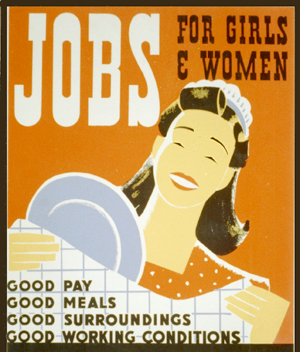
Today's story in Women's Enews that every woman in this economy needs to read

Obama's stimulus plan, while leaving out some key advances in women's health coverage, provides important employment benefits for women. Here are three of the key initiatives, as explained in today's Women's Enews:

---Benefits will now be provided to workers who must leave their jobs for compelling family reasons, such as caring for ill or disabled family members, relocating with a spouse whose job has moved to another area, or escaping domestic violence in which the abuser follows the woman to her workplace;

---The earning test now looks at the worker's most recent employment, instead of excluding the last three to six months, making it much easier for low-wage workers and new entrants to the work force (read: large numbers of women) to qualify for benefits.

---Benefits are now available to workers seeking part-time work which also includes many women.The author of the article,
Mimi Abramovitz, gives an astute account of previous governmental practices that have led to the gender wage gap and how these initiatives by Obama's administration will help to correct some of them.

Here's just one way that Abramovitz explains the gender gap:
Women lost out because these rules reflected and supported male work patterns that by definition penalized women. The hidden assumption--that low earnings and fewer hours of work reflected a weak commitment to work--disadvantaged women who receive less pay and work fewer hours because they still bear the brunt of family responsibilities.

i.e. if you were a woman who worked part-time so you could care for your children, the workforce labeled you as "lazy." In addition, Abramovitz points out that if a woman quit her job to move with her family to a new location (for her spouse's job), or if she moved to escape domestic violence, she was considered to have "voluntarily" quit. Now, the current administration is asking how "voluntary" such a move really is.

It's good progress, and while many women will still face incredibly difficult choices in this economy, I'm thankful that our goverment seems to be wearing a clear set of gender lenses.

Sunday, March 22, 2009

New study says a nation's stability is based on how it treats its women

I started this blog because I felt that I was continuously receiving the question, "Why does gender matter?" Now, a new study seems to be answering that question by suggesting that gender matters because peace matters.

Researchers at BYU (fascinating in itself) published a study in the Harvard journal, International Security, on the correlation between a country's overall stability and its treatment of women.

The writers conclude that the best predictor of societies' peacefulness is how well they safeguard the interests of women. To determine that, researchers looked at data on such factors as women's voice in government, access to victim services, crime statistics, maternal health, and laws and social mores regarding women's rights.

According to an article in the Salt Lake Tribune that reports on the study, From the overall data, it's clear that where there is devaluation of females in the society, there is a greater tendency for conflict, both inter- and intrastate conflict," says Ballif-Spanvill, a psychology professor who directs BYU's Women's Research Institute. "We want people to study these issues through the lens of gender.

The other incredible result of this study is the creation of a comprehensive database of qualitative statistics about women thoughout the world. Instead of relying on statistics about domestic violence and abuse, these researchers interviewed women about the nuances of their conditions.

It seems that gender not only matters to this individual blogger, but to the stability of nations themselves. Who knew?

Thursday, March 19, 2009

Happy birthday, Barbie.

Hard to believe, but she's 50 today. Thank God for botox...er...plastic, right?

So I could talk in this post about how harmful Barbie has been to women's body image for the last half century, but if you really think that nippleless size 38 boobs are a normal physicality to ascribe to, you've got problems...problems that this blog post isn't going to solve.

I could talk about how Mattel actually altered these unrealistic proportions in 1997 after so many complaints, but Bitch editor Lisa Jervis did it so much better in a Mother Jones' blog.

Instead, I offer two possibly fresh Barbie insights:

1. If you haven't already done so, buy the book Kinky by Denise Duhamel. It's still the funniest book of poetry I've ever read. Makes you see Barbie in a whole new light.

2. On another note, consider the ways that Barbie has instilled upon our culture the ideal of Caucasian beauty (yes, despite the later "ethnic" Barbies). What happens when we equate "beauty" with "whiteness?" The video below poses a very scary answer. Note, particularly, the study with the dolls...

Tuesday, March 17, 2009

European Union bans gendered language...and the men complain

Ok, so the news itself is interesting: The European Parliament has issued a pamphlet that prohibits the use of terms like "Mrs." and "Miss." (See my post last year on why these terms are discriminatory.)

Yay! Are you cheering yet? I mean, this is great news. This is FANTASTIC news. This is the kind of thing that feminist theorists have PRAYED for all these years (even the agnostic ones). How long have we talked about the ways that language creates reality?

A long time, ladies. A long time.

But, wait, oh eager feminists, because it doesn't stop there. The pamphlet also offers alternatives for gender-specific language besides just personal prefixes:

Sportsmen' should be called 'athletes', 'statesmen' should be referred to as 'political leaders' , and terms like 'synthetic' or 'artificial' should be used in place of 'man-made'.

Finally! A language that reflects the reality that women can be athletes and political leaders. Finally, Simone De Beauvoir, a sentiment that every "thing" is not generically male.

But before you get too excited, let me say that what strikes me as truly intriguing (and not a little bit upsetting) about this groundbreaking development is the fact that so many people are just plain up in arms about the whole thing. If you Google this news story, you'll find lots and lots of anger.

Oh, and did I mention that all of that vitriol (that I found, anyway) is generated by men?

For instance, West Midlands Conservative MEP Philip Bradbourn says in response to the pamphlet: I will have no part of it. I will continue to use my own language and expressions, which I have used all my life, and will not be instructed by this institution or anyone else in these matters.

One politician actually declared the pamphlet a "waste of taxpayers money."

Right. Well, Mr. Bradbourn and friends, here's how I see it: You like your language because it gives YOU power and agency. As a male, you grew up thinking you could be just about anything (sportsman, statesman etc.). The other half of our world grew up being told through our language that we only fit into certain gendered professions. I can be waitress and maid but not fireman or policeman.

If we don't change our language itself, how will we ever change our reality?

Way to go, EU! Here's one feminist who hopes the U.S. will soon follow suit

...or dress...

Monday, March 16, 2009

A little pick-me-up...in just SIX words!

My last few posts have been sort of downers, and more than one person has mentioned to me today that they've caught a case of the drearies. So, to spruce up this moody March day, I offer you a wonderful concept: the six-word memoir.


Six-Word Memoir book preview from SMITHmag on Vimeo.

This is such a great and stress-relieving exercise. It forces you to focus on what's important to your philosophy of life and cut out the not-so-important stuff. Here are some of my own:

Face = my mother's; Hands = my own

Loved anything that moved, including myself.

I wish Jesus was a woman.

Sleep before breakfast ...and after.


Writing makes me want to scream.


(I think it's interesting that so many of the above relate to gender in some way...)

Add your own to the comments section!

Oh, and be sure to check out the latest book from Smith Magazine, on six-word memoirs about love and relationships.


Six-Word Memoirs on Love & Heartbreak from SMITHmag on Vimeo.

Saturday, March 14, 2009

Tennis and the "T" in LGBTQ

A fascinating debate has ensued over tennis pro Sarah Gronert, who was born with both male and female genitalia. The question is whether or not she should be allowed on the female competition circuit.

Three years ago, amid intense scrutiny and harassment from friends and the media, Gronert underwent surgery to remove the male genitalia. The whole ordeal almost made her quit tennis altogether.

I don't blame her. Can you imagine having your genitalia discussed and criticized all over the news?

This is one of those moments when the debate itself is not good enough. Instead, we need to remember that we're dealing with a human being here.

My mom works in the medical profession, and I remember the first time she encountered a transgendered patient. She called me just about every day, telling me that the young person was very ill (with an illness unrelated to sexual reassignment surgery), and how much compassion my mom felt for her. My mom said to me, "I don't know if I should call the patient 'him' or 'her.'" We talked about what was acceptable (in this case, the gender one has chosen in surgery) and how it's completely appropriate to ask the patient's preference. But more importantly, I told my mom that the best thing she could do was to care for this individual and offer compassion.

My mom comes from a relatively conservative church background, and in our small town, transgendered folks are not generally visible to the public eye. I was a little concerned that my mom would act awkwardly, but on the fourth day that the person was in the hospital, Mom called and said, "I realized today that it doesn't even matter what gender she is. She's just a human being who is in need of care."

The issue of transgender individuals is a complex one because it defies our society's definition of gender binaries. We like to cling to our "firm" ideas of male and female, despite evidence to the contrary.

The APA defines transgender as the following:
Transgender is an umbrella term used to describe people whose gender identity (sense of themselves as male or female) or gender expression differs from that usually associated with their birth sex. Many transgender people live part-time or full-time as members of the other gender. Broadly speaking, anyone whose identity, appearance, or behavior falls outside of conventional gender norms can be described as transgender. However, not everyone whose appearance or behavior is gender-atypical will identify as a transgender person.

Here's an excerpt from an eye-opening article from the Advocate that describes how high the transgender population really is:

Next time you find yourself in a crowd of 5,000 people, consider this: In the crowd there will be on average one person living with muscular dystrophy. There will also be on average two people who have already undergone male-to-female sex-reassignment surgery. And there may as many as 75 in that crowd who fall under the transgender umbrella. Are you surprised?

And while novels like Jeffrey Eugenides' Middlesex are bringing this issue to light, there is still much ignorance surrounding the topic.

I wish our society would stop attacking Sarah Gronert, the individual, and instead allow this situation to cultivate dialogue on our binaries of gender in the first place. In many ways, we've stopped volleying the issue of gender identity in thoughtful ways. Instead, we've served up a verdict on Sarah Gronert that is anything but love-love.